
IPCC:AR6/WGIII: Difference between revisions
No edit summary |
|||
| Line 99: | Line 99: | ||
== Glossary Terms == | == Glossary Terms == | ||
{{GlossaryTerms | |||
| glossary_page = IPCC:AR6/Data/Glossary | |||
| terms = 1.5°C warmer worlds, Acceptability of policy or system change, Access to modern energy services, Adaptation, Adaptation limits, Adaptation options, Adaptation pathways, Adaptive capacity, Adaptive governance, Additionality, Adverse side-effect, Aerosol, Afforestation, Agreement, Agriculture, Forestry and Other Land Use, Agroecology, Air pollution, Albedo, Anomaly, Anthropogenic, Anthropogenic emissions, Anthropogenic removals, Atmosphere, Avoid, Shift, Improve, Baseline period, Baseline/reference, Baseline scenario, Biochar, Biodiversity, Bioenergy, Bioenergy with carbon dioxide capture and storage, Biofuel, Biogenic carbon emissions, Biogeophysical potential, Biomass, Black carbon, Blue carbon, Blue infrastructure, Business as usual, CO2 equivalent emission, Carbon cycle, Carbon dioxide, Carbon dioxide capture and storage, Carbon dioxide capture and utilisation, Carbon dioxide removal, Carbon footprint, Carbon intensity, Carbon neutrality, Carbon price, Carbon stock, Choice architecture, Circular economy, Cities, Citizen science, City region, Climate, Climate change commitment, Climate extreme, Climate finance, Climate governance, Climate justice, Climate model, Climate projection, Climate-resilient pathways, Climate sensitivity, Climate services, Climate system, Climate variability, Co-benefits, Concentrations scenario, Conference of the Parties, Confidence, Conservation agriculture, Consumption-based emissions, Coping capacity, Cost–benefit analysis, Cost-effectiveness analysis, Cumulative emissions, Decarbonisation, Decent Living Standard, Decoupling, Deforestation, Deliberative governance, Demand, Demand- and supply-side measures, Demand-side measures, Desertification, Developed/developing countries, Development pathways, Diet, Direct air capture, Direct air carbon dioxide capture and storage, Direct and indirect services, Direct emissions, Disaster, Disaster risk management, Discounting, Disruptive innovation, Distributive equity, Drought, Economic potential, Ecosystem, Ecosystem-based adaptation, Ecosystem services, Embodied [emissions, water, land], Emission and Socio-economic Scenario Ensemble, Emission factor/Emissions intensity, Emission pathways, Emission trajectories, Emissions scenario, Emulation, Emulators, Enabling conditions, Energy access, Energy efficiency, Energy poverty, Energy security, Energy services, Enhanced weathering, Ensemble, Enteric fermentation, Equality, Equity, Eudaimonic, Evidence, Exergy, Exposure, Extreme weather event, Fairness, Feasibility, Final energy, Flexibility, Flexible governance, Flood, Food loss and waste, Food security, Food system, Forest, Fossil fuels, Fuel poverty, Fugitive emissions, Gender equity, Geothermal energy, Gini coefficient, Global carbon budget, Global mean surface air temperature, Global mean surface temperature, Global warming, Global warming potential, Governance, Governance capacity, Grazing land, Green Climate Fund, Green infrastructure, Greenhouse gas emission metric, Greenhouse gas neutrality, Greenhouse gases, Grey infrastructure, Gross domestic product, Halocarbons, Hedonic, Household carbon footprint, Human behaviour, Human rights, Human security, Human system, Hydropower, Impacts, Incremental adaptation, Indigenous knowledge, Indirect emissions, Indirect land-use change, Industrial revolution, Inequality, Infrastructure, Institutional capacity, Institutions, Integrated assessment, Integrated assessment model, Integrated assessment scenario ensemble, Internet of Things, Irreversibility, Just transitions, Justice, Kaya identity, Land, Land cover, Land-cover change, Land degradation, Land degradation neutrality, Land management, Land management change, Land potential, Land rehabilitation, Land restoration, Land use, Land use, land-use change and forestry, Land-use change, Latent heat flux, Leakage, Leapfrogging, Lifecycle assessment, Likelihood, Livelihood, Local knowledge, Lock-in, Long-lived climate forcers, Loss and Damage, and losses and damages, Maladaptive actions, Malnutrition, Managed forest, Managed grassland, Managed land, Market failure, Material substitution, Measurement, Measurement, Reporting and Verification, Megacity, Methane, Migrant, Migration, Mitigation, Mitigation measures, Mitigation option, Mitigation pathways, Mitigation potential, Mitigation scenario, Multi-level governance, Narrative, Nature-based solutions, Nature's contributions to people, Net negative greenhouse gas emissions, Net zero CO2 emissions, Net zero greenhouse gas emissions, Nitrous oxide, Non-overshoot pathways, Ocean alkalinization/Ocean alkalinity enhancement, Ocean fertilisation, Offset, Organic farming, Overshoot pathways, Ozone, Pareto optimum, Participatory governance, Particulate matter, Path dependence, Pathways, Peri-urban areas, Policies, Political economy, Pool, carbon and nitrogen, Poverty, Poverty eradication, Pre-industrial, Precursors, Primary energy, Primary production, Private costs, Production-based emissions, Projection, Prosumers, Radiative forcing, Rebound effect, Reducing Emissions from Deforestation and Forest Degradation, Reference period, Reference scenario, Reforestation, Regenerative agriculture, Region, Remaining carbon budget, Renewable energy, Reporting, Representative Concentration Pathways, Resilience, Resource cascade, Risk, Risk assessment, Risk management, Risk perception, Risk trade-off, Scenario, Scenario storyline, Sea surface temperature, Sequestration, Sequestration potential, Service provisioning, Services, Settlements, Shared socio-economic pathways, Sharing economy., Shifting development pathways, Shifting development pathways to sustainability, Short-lived climate forcers, Short-lived climate pollutants, Simple climate model, Sink, Small Island Developing States, Smart grids, Social cost of carbon, Social costs, Social-ecological system, Social group, Social identity, Social inclusion, Social infrastructure, Social learning, Socio-economic scenario, Socio-technical transitions, Soil carbon sequestration, Soil organic carbon, Soil organic matter, Solar energy, Solar radiation modification, Source, Southern Annular Mode, Spill-over effect, Storyline, Stranded assets, Subnational actors, Sufficiency, Supply-side measures, Sustainability, Sustainable Development Goals, Sustainable development, Sustainable forest management, Sustainable intensification, Sustainable land management, Systems of Innovation, Technical potential, Technology deployment, Technology diffusion, Technology transfer, Teleconnection, Temperature overshoot, Tipping point, Total carbon budget, Trade-off, Traditional biomass, Transformation, Transformation pathways, Transformational adaptation, Transient climate response, Transient climate response to cumulative CO2 emissions, Transition, Uncertainty, United Nations Convention to Combat Desertification, United Nations Framework Convention on Climate Change, Uptake, Urban Systems, Urban, Urban heat island, Urbanisation, Variable renewable energy, Verification, Vulnerability, Well-being, Wind energy, Zero emissions commitment | |||
}} | |||
Revision as of 05:12, 22 May 2026
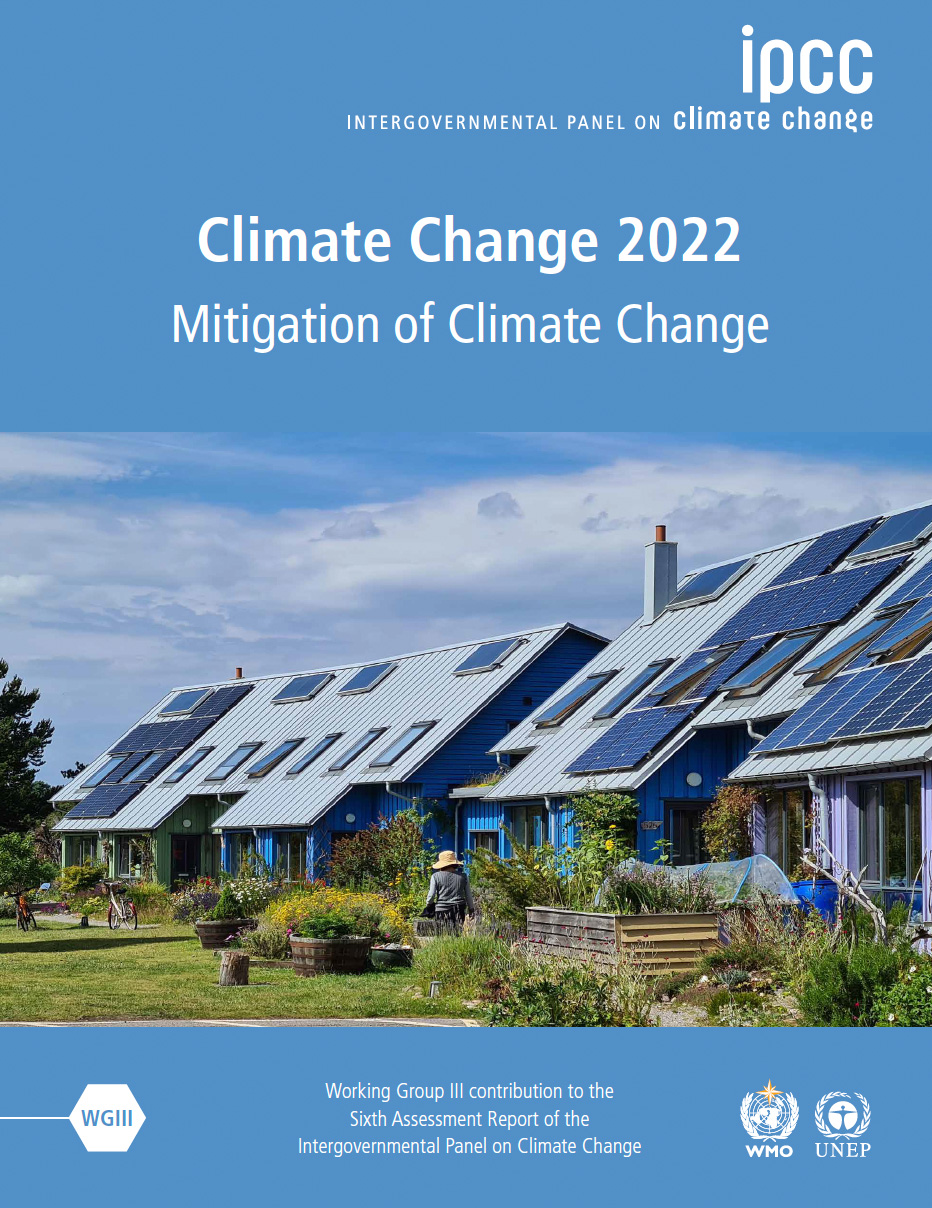
Climate Change 2022: Mitigation of Climate Change (WGIII)
Report Summary
Table of Contents
Citation Suggestion
IPCC, 2022: Climate Change 2022: Mitigation of Climate Change. Contribution of Working Group III to the Sixth Assessment Report of the Intergovernmental Panel on Climate Change [P.R. Shukla, J. Skea, R. Slade, A. Al Khourdajie, R. van Diemen, D. McCollum, M. Pathak, S. Some, P. Vyas, R. Fradera, M. Belkacemi, A. Hasija, G. Lisboa, S. Luz, J. Malley, (eds.)]. Cambridge University Press, Cambridge, UK and New York, NY, USA. doi: 10.1017/9781009157926
Acronyms
Glossary Terms
1.5°C warmer worlds Acceptability of policy or system change Access to modern energy services Adaptation Adaptation limits Adaptation options Adaptation pathways Adaptive capacity Adaptive governance Additionality Adverse side-effect Aerosol Afforestation Agreement Agriculture Forestry and Other Land Use Agroecology Air pollution Albedo Anomaly Anthropogenic Anthropogenic emissions Anthropogenic removals Atmosphere Avoid Shift Improve Baseline period Baseline/reference Baseline scenario Biochar Biodiversity Bioenergy Bioenergy with carbon dioxide capture and storage Biofuel Biogenic carbon emissions Biogeophysical potential Biomass Black carbon Blue carbon Blue infrastructure Business as usual CO2 equivalent emission Carbon cycle Carbon dioxide Carbon dioxide capture and storage Carbon dioxide capture and utilisation Carbon dioxide removal Carbon footprint Carbon intensity Carbon neutrality Carbon price Carbon stock Choice architecture Circular economy Cities Citizen science City region Climate Climate change commitment Climate extreme Climate finance Climate governance Climate justice Climate model Climate projection Climate-resilient pathways Climate sensitivity Climate services Climate system Climate variability Co-benefits Concentrations scenario Conference of the Parties Confidence Conservation agriculture Consumption-based emissions Coping capacity Cost–benefit analysis Cost-effectiveness analysis Cumulative emissions Decarbonisation Decent Living Standard Decoupling Deforestation Deliberative governance Demand Demand- and supply-side measures Demand-side measures Desertification Developed/developing countries Development pathways Diet Direct air capture Direct air carbon dioxide capture and storage Direct and indirect services Direct emissions Disaster Disaster risk management Discounting Disruptive innovation Distributive equity Drought Economic potential Ecosystem Ecosystem-based adaptation Ecosystem services [[IPCC:AR6/Data/Glossary#Embodied_[emissions|Embodied [emissions]] water [[IPCC:AR6/Data/Glossary#land]|land]]] Emission and Socio-economic Scenario Ensemble Emission factor/Emissions intensity Emission pathways Emission trajectories Emissions scenario Emulation Emulators Enabling conditions Energy access Energy efficiency Energy poverty Energy security Energy services Enhanced weathering Ensemble Enteric fermentation Equality Equity Eudaimonic Evidence Exergy Exposure Extreme weather event Fairness Feasibility Final energy Flexibility Flexible governance Flood Food loss and waste Food security Food system Forest Fossil fuels Fuel poverty Fugitive emissions Gender equity Geothermal energy Gini coefficient Global carbon budget Global mean surface air temperature Global mean surface temperature Global warming Global warming potential Governance Governance capacity Grazing land Green Climate Fund Green infrastructure Greenhouse gas emission metric Greenhouse gas neutrality Greenhouse gases Grey infrastructure Gross domestic product Halocarbons Hedonic Household carbon footprint Human behaviour Human rights Human security Human system Hydropower Impacts Incremental adaptation Indigenous knowledge Indirect emissions Indirect land-use change Industrial revolution Inequality Infrastructure Institutional capacity Institutions Integrated assessment Integrated assessment model Integrated assessment scenario ensemble Internet of Things Irreversibility Just transitions Justice Kaya identity Land Land cover Land-cover change Land degradation Land degradation neutrality Land management Land management change Land potential Land rehabilitation Land restoration Land use Land use land-use change and forestry Land-use change Latent heat flux Leakage Leapfrogging Lifecycle assessment Likelihood Livelihood Local knowledge Lock-in Long-lived climate forcers Loss and Damage and losses and damages Maladaptive actions Malnutrition Managed forest Managed grassland Managed land Market failure Material substitution Measurement Measurement Reporting and Verification Megacity Methane Migrant Migration Mitigation Mitigation measures Mitigation option Mitigation pathways Mitigation potential Mitigation scenario Multi-level governance Narrative Nature-based solutions Nature's contributions to people Net negative greenhouse gas emissions Net zero CO2 emissions Net zero greenhouse gas emissions Nitrous oxide Non-overshoot pathways Ocean alkalinization/Ocean alkalinity enhancement Ocean fertilisation Offset Organic farming Overshoot pathways Ozone Pareto optimum Participatory governance Particulate matter Path dependence Pathways Peri-urban areas Policies Political economy Pool carbon and nitrogen Poverty Poverty eradication Pre-industrial Precursors Primary energy Primary production Private costs Production-based emissions Projection Prosumers Radiative forcing Rebound effect Reducing Emissions from Deforestation and Forest Degradation Reference period Reference scenario Reforestation Regenerative agriculture Region Remaining carbon budget Renewable energy Reporting Representative Concentration Pathways Resilience Resource cascade Risk Risk assessment Risk management Risk perception Risk trade-off Scenario Scenario storyline Sea surface temperature Sequestration Sequestration potential Service provisioning Services Settlements Shared socio-economic pathways Sharing economy. Shifting development pathways Shifting development pathways to sustainability Short-lived climate forcers Short-lived climate pollutants Simple climate model Sink Small Island Developing States Smart grids Social cost of carbon Social costs Social-ecological system Social group Social identity Social inclusion Social infrastructure Social learning Socio-economic scenario Socio-technical transitions Soil carbon sequestration Soil organic carbon Soil organic matter Solar energy Solar radiation modification Source Southern Annular Mode Spill-over effect Storyline Stranded assets Subnational actors Sufficiency Supply-side measures Sustainability Sustainable Development Goals Sustainable development Sustainable forest management Sustainable intensification Sustainable land management Systems of Innovation Technical potential Technology deployment Technology diffusion Technology transfer Teleconnection Temperature overshoot Tipping point Total carbon budget Trade-off Traditional biomass Transformation Transformation pathways Transformational adaptation Transient climate response Transient climate response to cumulative CO2 emissions Transition Uncertainty United Nations Convention to Combat Desertification United Nations Framework Convention on Climate Change Uptake Urban Systems Urban Urban heat island Urbanisation Variable renewable energy Verification Vulnerability Well-being Wind energy Zero emissions commitment